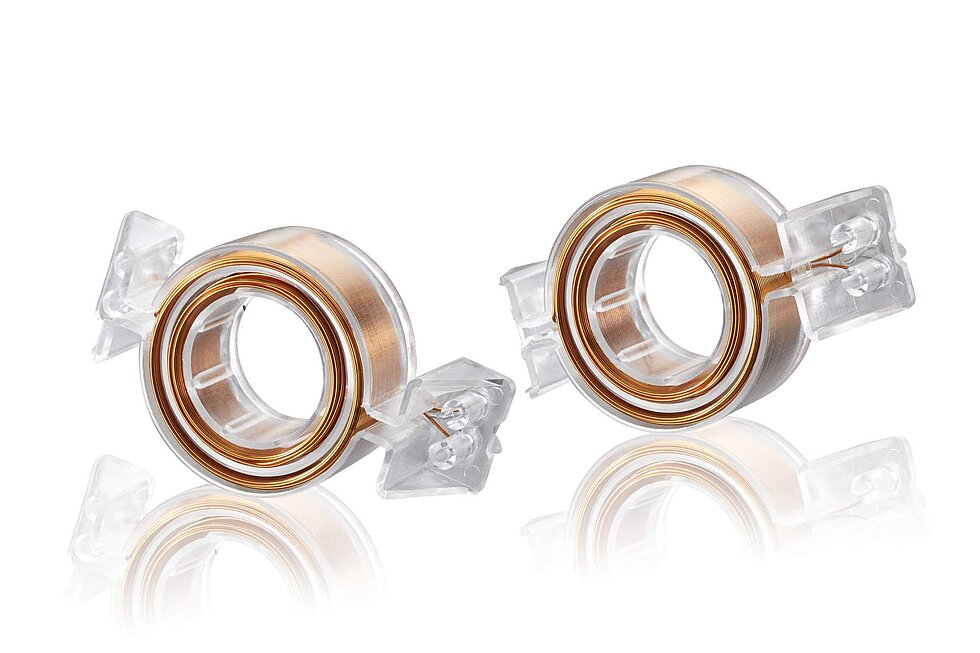
Hand-made injection-moulded parts
Insert technology for small batch sizesAutomation for the sake of it? Not here. Sometimes manual production is the better choice for injection-moulded parts.
Automatically overmoulding various inserts? That’s only worthwhile for high production volumes. At the prototype stage with small batch sizes, we therefore avoid full automation and instead rely on insert moulding technology.
The inserts are placed into the moulds by hand and then overmoulded. This makes insert moulding a process that is both high-quality and cost-effective for smaller batch sizes.


Advantages of the insert technique
Excellent value for money for orders of up to 5,000 itemsNowadays, many components are designed to perform several functions at once. For example, screw-in and threaded bushings or plug-in contacts are integrated directly into the plastic part.
In the injection moulding process, once these have been inserted into the mould, they are overmoulded, so that they later form part of a ‘hybrid component’.
In prototype injection moulding or small-batch injection moulding , automatic insertion is not used for economic reasons.
Particularly for runs of up to 5,000 units , Solidtec offers an outstanding value for money. Are you interested in injection moulding using insert technology? Then get in touch with us!

The ideal solution for electric mobility
Particularly in the wake of numerous new developments in the field of electric mobility , Solidtec GmbH has actively supported various projects with its insert moulding technology and built up a wealth of experience.
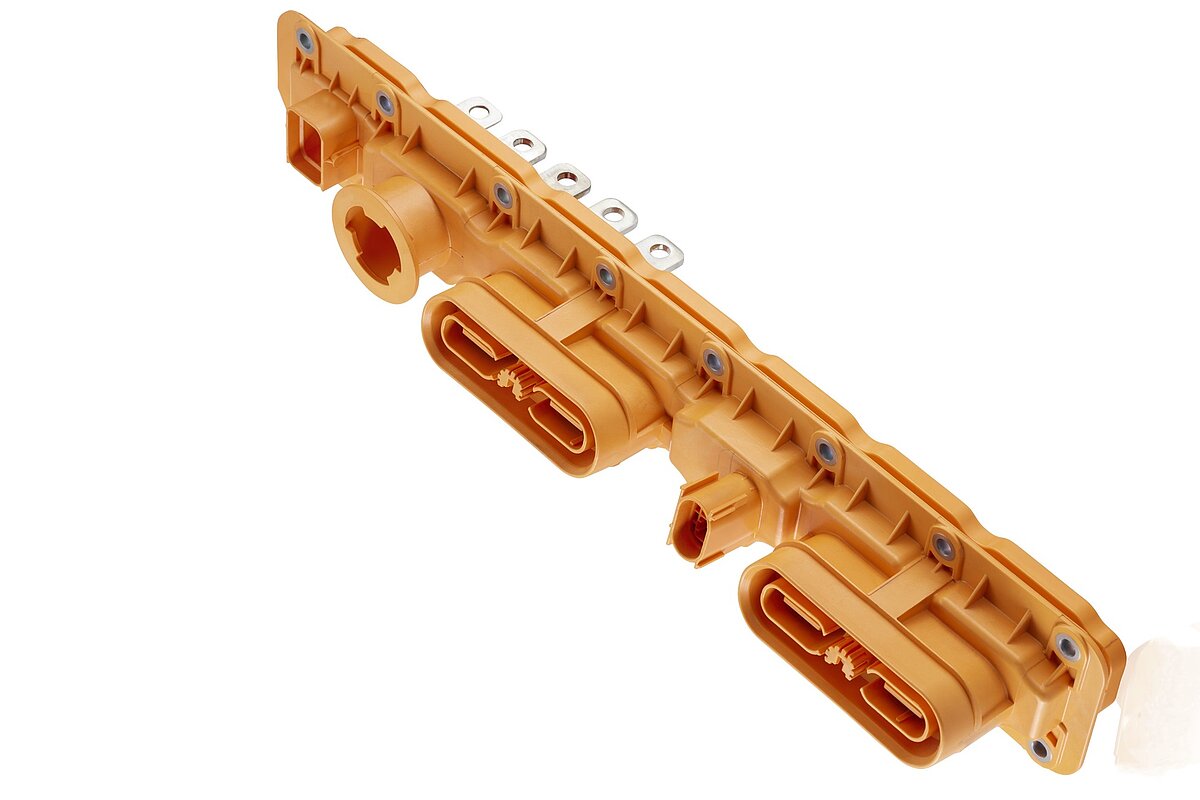
These include the overmoulding of busbars, which must be embedded in plastic material everywhere except at the contact area; ready-assembled contact carriers at the cable outlet; and the overmoulding of fixing sleeves onto cable harnesses.
We have perfected our technique for inserting busbars, plug-in contacts, stamped grids and threaded bushings, and produce your components using manual insertion on vertical and horizontal injection moulding machines.
Arrange a consultation
Do you need plastic parts with embedded metal components, threaded inserts or similar for specific requirements?
If so, insert moulding may be the right process for you. Please get in touch with us!
Our prototype injection moulding is ideal for functional prototypes and display samples for testing.
Alternatively, rapid prototyping using additive manufacturing may be a suitable choice.
Frequently asked questions about insert moulding in injection moulding
FAQWhat quantities of parts can be produced using insert moulding? For which industries is this process suitable? Here you will find answers to frequently asked questions about insert moulding in plastic injection moulding.
The injection moulding process makes it possible to integrate metal inserts such as threaded bushings, contacts or busbars directly into plastic components. This results in functional components with high stability and integrated technical properties.
In the insert moulding process, pre-manufactured inserts such as metal bushings, contacts or stamped grids are placed into an injection mould and then overmoulded with plastic. This produces components that combine mechanical stability and functional properties in a single process.
The insert technology is suitable for components in which mechanical connections, electrical contacts or reinforcements are to be integrated directly . Typical applications include threaded inserts, contact carriers or components with integrated current-carrying paths.
Insert moulding offers significant advantages, particularly in the field of electromobility , for example in the overmoulding of busbars, contact carriers or cable components. Furthermore, the process is used in many technical sectors.
Experience has shown that the manual production of injection-moulded parts using insert moulding is suitable for production runs of up to around 5,000 units and offers very good value for money in this range.
Insertion technology is particularly cost-effective for small to medium production runs where automation of the insertion process is either unnecessary or not economically viable.
Prototype injection moulding is recommended for very small batch sizes. For larger quantities, small-batch injection moulding or an automated solution is generally used.
Yes, almost all standard bushings or threaded bushings can be inserted into the injection mould and overmoulded. The inserts can either be supplied separately or selected alongside suitable standard components.
Where components need to be completely encased in plastic, a two-stage injection moulding process is often used. First, a pre-moulded part is produced to hold the inserts in place. This is followed by a second overmoulding process to completely encase all areas and ensure precise positioning.