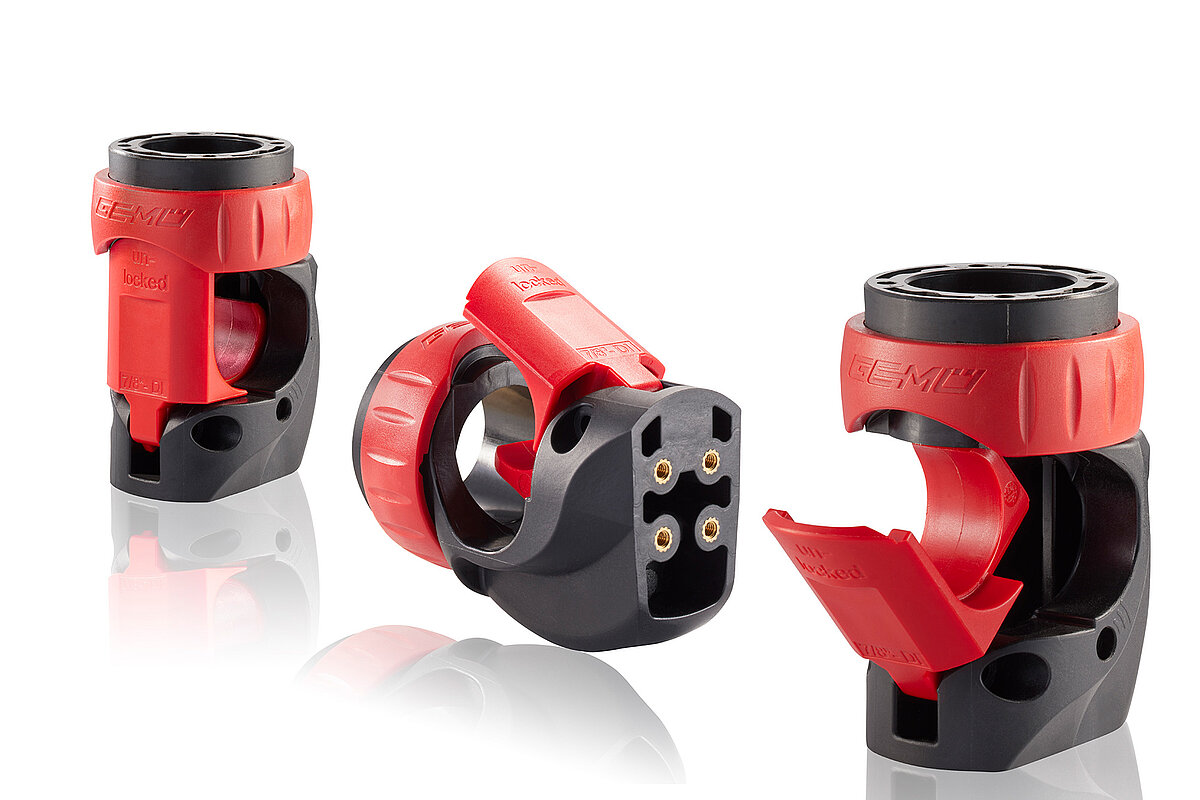
Small-batch plastic components
A cost-effective solution for small to medium production runsA coherent concept, short lead times and high output volumes – this is how Solidtec produces plastic components in small batches and pre-series production. With our specialised small-batch injection moulding service, we offer you a cost-effective solution for manufacturing high-quality components in small to medium quantities. For very small quantities and functional prototypes, we recommend our prototype injection moulding.
Quality is our top priority. Particularly when producing plastic parts in small batches, it is crucial that the mould inserts are exceptionally robust. Our design engineers therefore ensure, right from the planning stage, that the moulds are designed to cope with larger production runs. Depending on the material, this allows up to 100,000 or more injection-moulded parts to be produced in small batches.
Thanks to the combination of our modular Solidtec core mould system and state-of-the-art automation, our plastic injection moulding for small batches is particularly cost-effective. The achievable output depends on the material used – you can find a list of the plastics we process here.
Book a consultation nowIs the production mould not ready on time? Or do you need spare parts at short notice? Our flexible moulds enable us to quickly overcome parts shortages. See for yourself why Solidtec is your reliable partner for small-batch production of plastic parts. | Small-batch injection moulding with SolidtecAre you looking for a cost-effective injection moulding process for up to 100,000 parts and beyond? In our FAQs, we provide answers to common questions about small-batch production. |
Advantages of small-batch injection moulding
Are you looking for a cost-effective injection moulding process for small-batch production of up to 100,000 plastic parts or more? Or for an alternative to 3D printing that offers better value for money with larger production runs? Then Solidtec’s plastic injection moulding for small-batch production is exactly what you need!
Using high-strength aluminium moulds from our own tool-making department , we create the ideal foundation for your plastic parts in small-batch production. Short lead times and an optimised cost-benefit ratio make our small-batch injection moulding the perfect solution.
The result: materials and finishes on a par with high-volume production, but at a fraction of the cost. Even for runs of around 100 injection-moulded parts, a small-batch production run is significantly more cost-effective than 3D printing. This means that small-batch injection moulding at Solidtec offers unbeatable value for money.
The ideal choice for plastic parts
That is why small-batch injection moulding is the best choice for manufacturing your plastic parts:
- Cost-effective: Production of 100 to 100,000 plastic parts and more.
- Production-grade quality: High-quality materials and finishes, just as in mass production.
- Flexible: Cost-effective adjustments to the mould are possible.
- Time-saving: Short lead times thanks to optimised processes.
- An alternative to 3D printing: More cost-effective for runs of 100 or more.
Would you like to realise your project as a small-batch injection-moulded production run?
Get in touch with us!
Do you need plastic prototypes before producing a small batch? For small quantities, our prototype injection mouldingservice, or alternatively rapid prototyping using additive manufacturing. Get in touch – together we’ll find the ideal solution for your project.
Examples of plastic parts produced by small-batch injection moulding


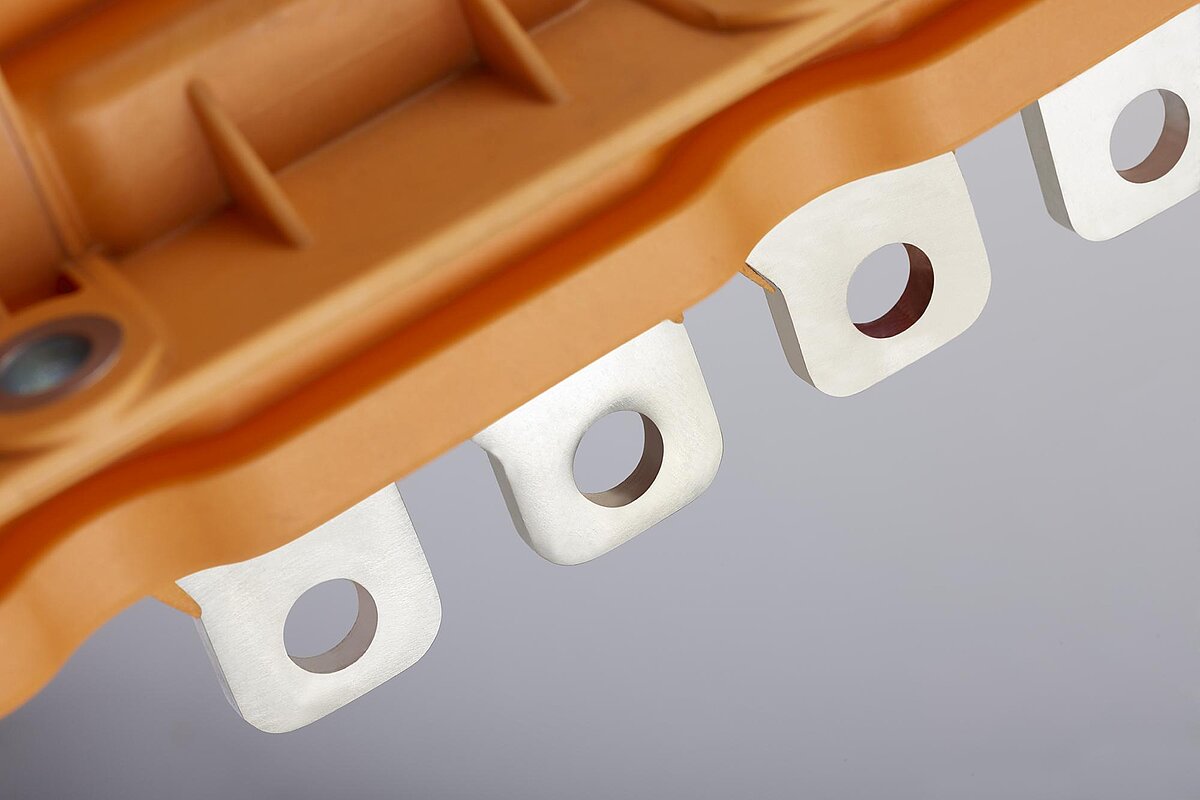
Specialised injection moulding processes
Whether it’s multi-component injection moulding, two-component injection moulding, insert moulding, liquid silicone rubber ( LSR) or micro-injection moulding: we select the right injection moulding process for every requirement. Your requirements are what drive us – whether in the production of two-component parts, the overmoulding of various inserts or the manufacture of intricate plastic parts.
Find out more about the various injection moulding processes for the efficient and cost-effective production of your plastic parts.
Arrange a consultation
Are you looking for a cost-effective solution for plastic parts made from original materials? Please get in touch with us!
Do you need prototypes for functional samples?
Take a look at our prototype injection moulding service.
Alternatively, rapid prototyping combined with additive manufacturing may be suitable.
Frequently asked questions about small-batch injection moulding
FAQ on small-batch injection mouldingWhat production volumes are achievable in small-batch production? What are the advantages over other injection moulding processes? How long does it take to produce a small batch, and how much does it cost?
In our FAQs, we answer common questions about small-batch injection moulding at Solidtec.
Advantages of small-batch injection moulding
Small-batch injection moulding enables the cost-effective production of high-quality plastic parts in medium quantities, whilst delivering quality on a par with mass production.
This process is an efficient solution, particularly for products with limited production runs or during early market launch.
Small-batch injection moulding involves the manufacture of plastic parts in relatively small quantities, typically between 100 and 100,000 parts. The process enables high-quality components to be produced efficiently and cost-effectively, and forms the bridge between prototyping and large-scale production.
Small-batch injection moulding is generally suitable for production runs ranging from around 100 to several tens of thousands of components. The exact economic range depends on the component, the material and the specific application.
Small-batch injection moulding offers several key advantages:
- Cost-effectiveness for medium production runs
- Material and surface quality close to that of mass production
- High repeatability
- Mould modifications with manageable effort
It therefore represents an efficient solution between 3D printing and high-volume production.
Components produced by small-batch injection moulding are largely equivalent to those produced in mass production in terms of material properties and surface quality. They are therefore suitable for functional applications and series production .
Small-batch injection moulding: Costs & cost-effectiveness
The costs involved in small-batch injection moulding depend on various factors, but can be significantly optimised through the targeted use of aluminium moulds.
Particularly for medium-volume production runs, the process offers an economically attractive alternative to other manufacturing technologies.
The costs consist mainly of the following components:
- Tooling costs for the aluminium mould
- Unit price depending on material, cycle time and quantity
- Set-up costs for configuring the machine
The use of aluminium moulds can reduce moulding costs and production times .
The key influencing factors are the material used, the component geometry, the cycle time, the production volume, and the requirements regarding surface finish and tolerances.
Aluminium tools can be manufactured more quickly and cost-effectively than traditional steel tools. This significantly reduces both the initial investment and the lead time until the first production run.
Production time depends on the complexity of the component, the quantity required and the level of capacity utilisation. Once the mould has been completed, the first parts can usually be produced within a few days to a few weeks.
The use of aluminium moulds and efficient processes enables short lead times. The first parts can often be delivered shortly after the mould has been approved .
A project typically involves tool design and manufacture, prototyping and subsequent mass production. Depending on requirements, adjustments to the tool can be implemented quickly.
The number of units that can be produced depends heavily on the plastic material used. Less abrasive materials allow for significantly higher output rates than heavily filled or high-temperature-resistant plastics.
Service life is influenced in particular by the following factors:
- Plastic material and filler content
- Mould temperature
- Mechanical stress during the injection moulding process
Typical figures for single-cavity moulds are:
- Unfilled PP: approx. 70,000 parts
- Unfilled ABS, POM, PA, PC: approx. 50,000 parts
- PA6 with 30% glass beads: approx. 40,000 parts
- PA with 10% glass fibre: approx. 30,000 parts
- PA with 30% glass fibre: approx. 40,000 parts
- PPS: approx. 2,000 parts
- PEEK: approx. 1,000 parts
Applications for small-batch plastic production
The transition between prototyping, small-batch production and subsequent large-scale production is often fluid. It is not so much a fixed quantity that is decisive, but rather the intended use of the components.
Small-batch injection moulding is also frequently used for the start-up phase of series production.
The distinction is primarily based on the intended use. Prototypes are used during the development phase, whilst small batches are intended for long-term use or small-scale series production.
There is no fixed minimum quantity. In many cases, small-batch production begins as soon as it becomes clear that no large-scale production is planned and that components will be manufactured on a permanent basis using aluminium moulds.
Yes, small-batch production tools are frequently used to meet initial market demand or to bridge the gap until mass production begins. This makes it possible to produce components that are already close to mass-production standard.